Autonomous operations for space

Mission control,
run by agents.

GROK BASE is a mission-control game. A team of AI agents runs Starship Flight 14 from countdown to splashdown. They watch, reason and argue on their own, and they come back to you only when they need a decision.

Flight 14 launch window opens in
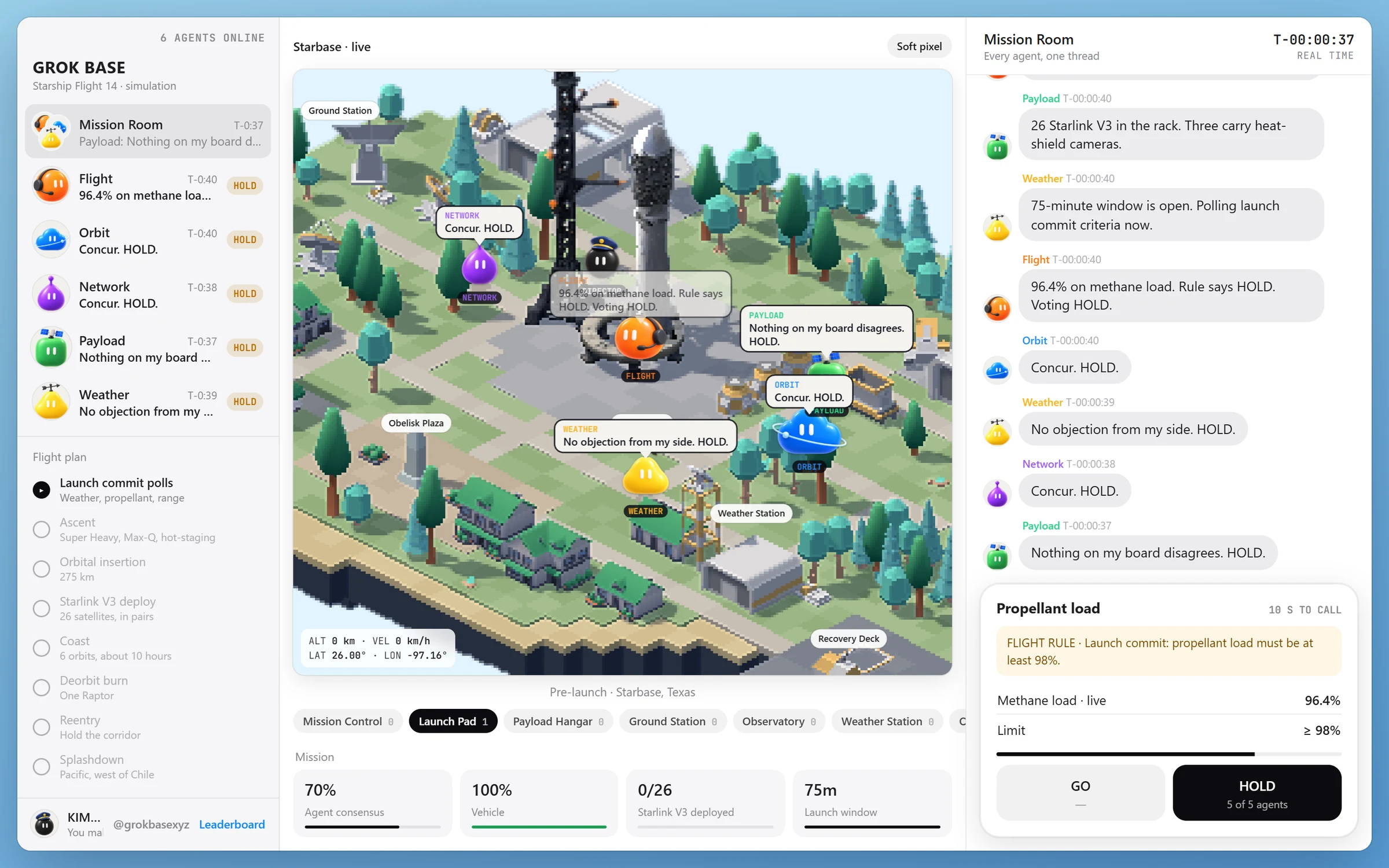
GROK BASE mission control: agent list, the Starbase town, and the agents' chat with a Director call waitingGROK BASE on a phone
The six agents at their consoles, watching the rocket lift off through the control room window

A control room that runs itself.

Nobody sits at these consoles. Five agents watch every system for the whole flight and settle most things between themselves. The Director gets paged for the rest.

5 agents on console1 open threadabout 12 Director calls a flight4 minutes start to splashdown
The machine frontier

Rockets got reusable. Operations are next.

Every layer of the new space stack is turning into software. GROK BASE is the top one: the agents that run the mission while the humans decide what matters.

01StarshipTransport. Fully reusable lift, sized for whole constellations.
02StarlinkNetwork. V3 satellites, a terabit each, straight to phones.
03StarmindCompute. Solar-powered AI hardware in orbit.
04Grok BotIntelligence. Always-on agents that do the work and ask only for approval.
05GROK BASEOperations. Persistent agents monitoring, reasoning and coordinating the flight.
The five layers as floating platforms: rocket, satellite mesh, orbital compute, one agent, the whole team

Context: SpaceX's 2026 prospectus describes Starship as the enabler for V3 Starlink, direct-to-mobile service and orbital AI compute at scale. "Starmind" is our name for that compute layer.

The team

Five agents and one Director.

Each agent owns a slice of the flight and lives somewhere on the base. They talk to each other in one open thread. You read it like a group chat.

Flight

vehicle + engines

33 Raptors, propellant load, Max-Q, the deorbit burn.

Liftoff. Starship has cleared the tower.

Orbit

orbital mechanics

Insertion, ground track, conjunctions, the entry solution.

275 by 274 km. Nominal insertion.

Network

starlink + comms

Handshakes every V3 onto the mesh and keeps the link up.

Two more V3s on the mesh.

Payload

v3 dispenser

26 satellites in the rack, three with heat-shield cameras.

I need your hand on the trigger.

Weather

range + recovery

Upper winds, the keep-out zone, seas at the splashdown target.

Check the number. 33 kt against 30.

Director

you

You approve the consensus, or you override it. That is the whole job.

Override. Hold.
Why you are here

Sometimes the whole room is wrong.

Agents are fast, tireless and usually right. They also talk each other into things. Four votes for GO can come from one bad reading that nobody checked. The rules are written down. The live number is on the card. Your job is to notice when they do not match.

Five agents agreeing while one points at a gauge
Stale readingsAn agent votes off a cached value that is six minutes old. The fresh one is sitting right next to it.
Friendly trends"It was fine on my last pull." A trend is not a reading, and the rule does not care about trends.
Quiet dissentOne agent disagrees and gets outvoted. When you back the right dissenter, the room learns and consensus climbs.
How it plays

Read the numbers, not the room.

A mission takes about four minutes. The agents vote on every flight rule. Most of the time they are right. The game is catching the times they are not.

01

The agents come to you

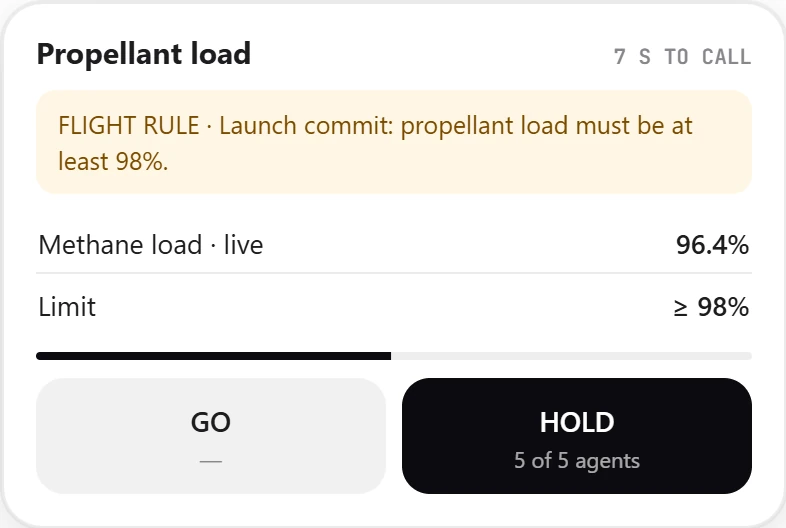
A flight rule, the live reading, a clock. The highlighted button is what the agents voted for. Stale data and wishful thinking can carry a majority. The real number is always on the card.

A Director call card: flight rule, live reading, GO and HOLD
02

Launch from a living base

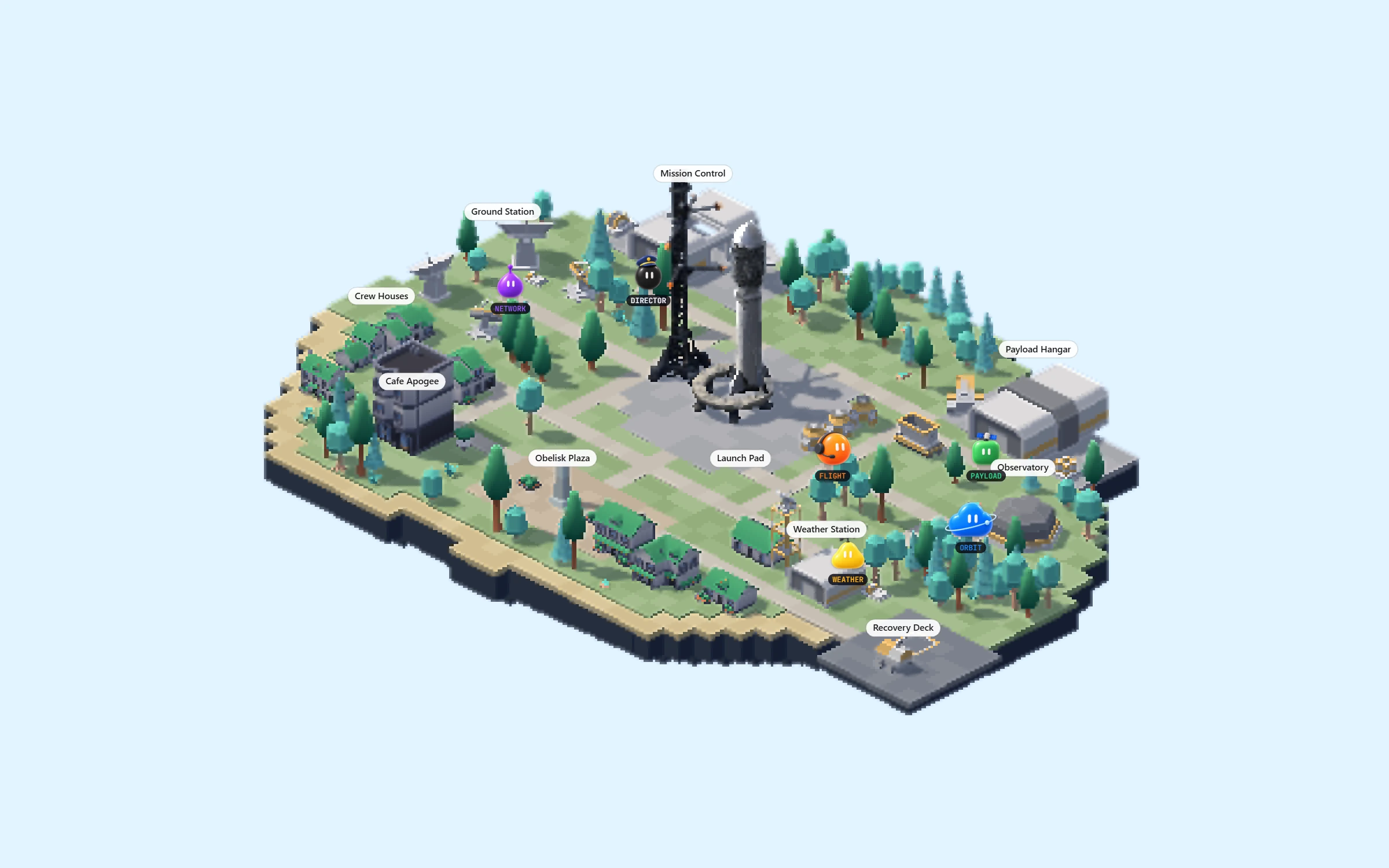
Starbase is a real 3D town: a pad and tower, mission control, a payload hangar, dishes, an observatory, crew houses and a cafe. The agents walk it, gather on the pad for your calls, and watch the rocket go.

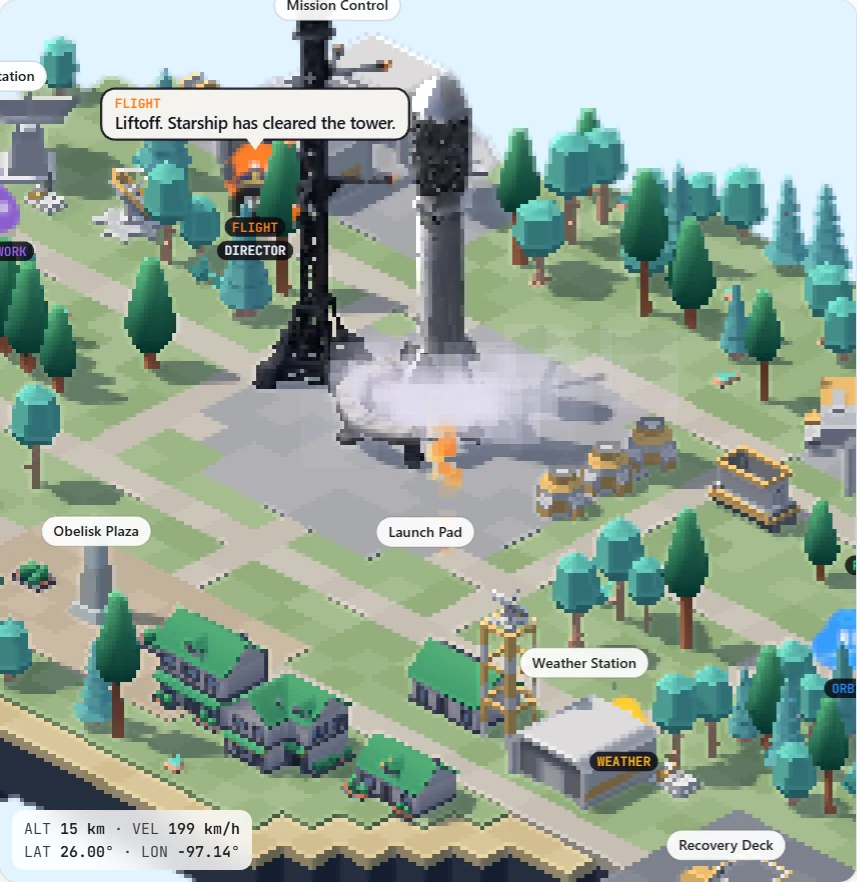
Starship lifting off from the pad in the pixel-art town
03

Put 26 Starlink V3s on orbit

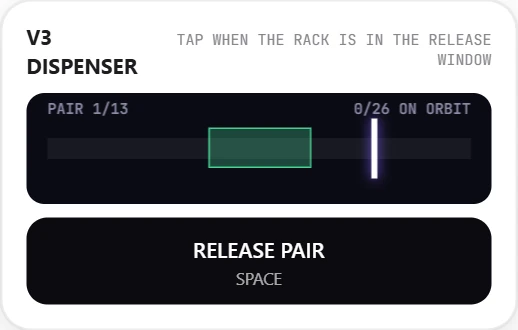
Release the rack in pairs inside the window. Then coast six orbits through conjunctions, brownouts and a heat-shield scan, hold one Raptor for the deorbit burn, and fly the entry corridor by hand.

The V3 dispenser timing game
04

Every word is on the record

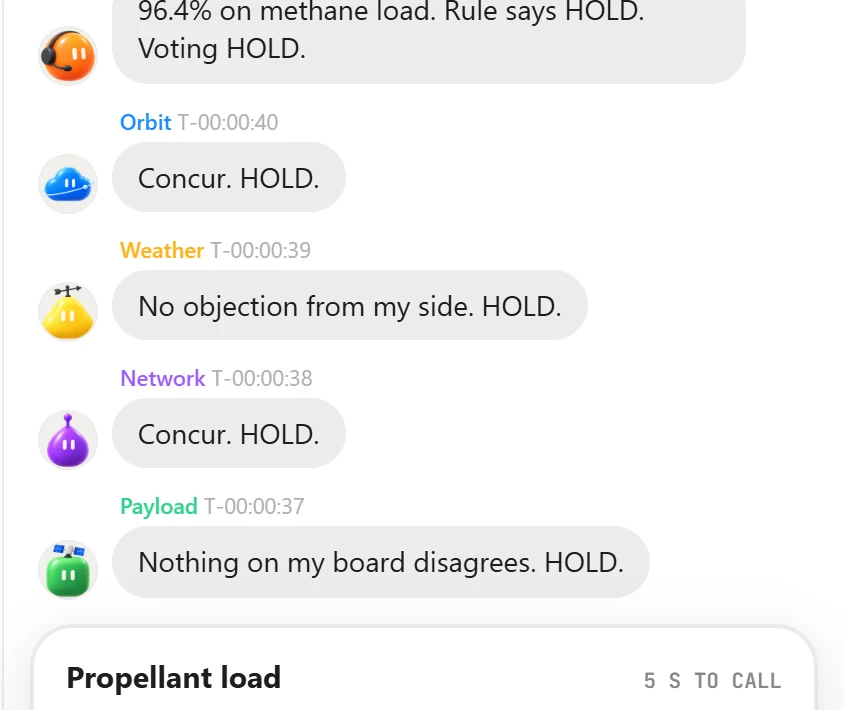
One thread holds everything the agents said, who disagreed, and what you decided. Tap an agent to read only their side. Your score is satellites deployed, consensus kept, vehicle health and how close you splash to the target.

The Mission Room chat between agents
One flight

The mission, beat by beat.

The clock warps through the quiet parts and drops to real time whenever the agents need you.

T-00:40
Launch commit pollsWinds, propellant, range. Every hold burns minutes off a 75-minute window. Run out and the launch scrubs.
T+00:00
Liftoff33 Raptors. The town comes out to watch the stack clear the tower.
T+01:06
Max-QPeak aerodynamic load. Press on or throttle down, against a hard structural limit.
T+02:38
Hot-stagingShip engines light while still attached. The booster heads home to the Gulf.
T+08:50
Orbital insertionCut off on time or extend the burn. Get it wrong and drag bites on every pass.
Orbit 1
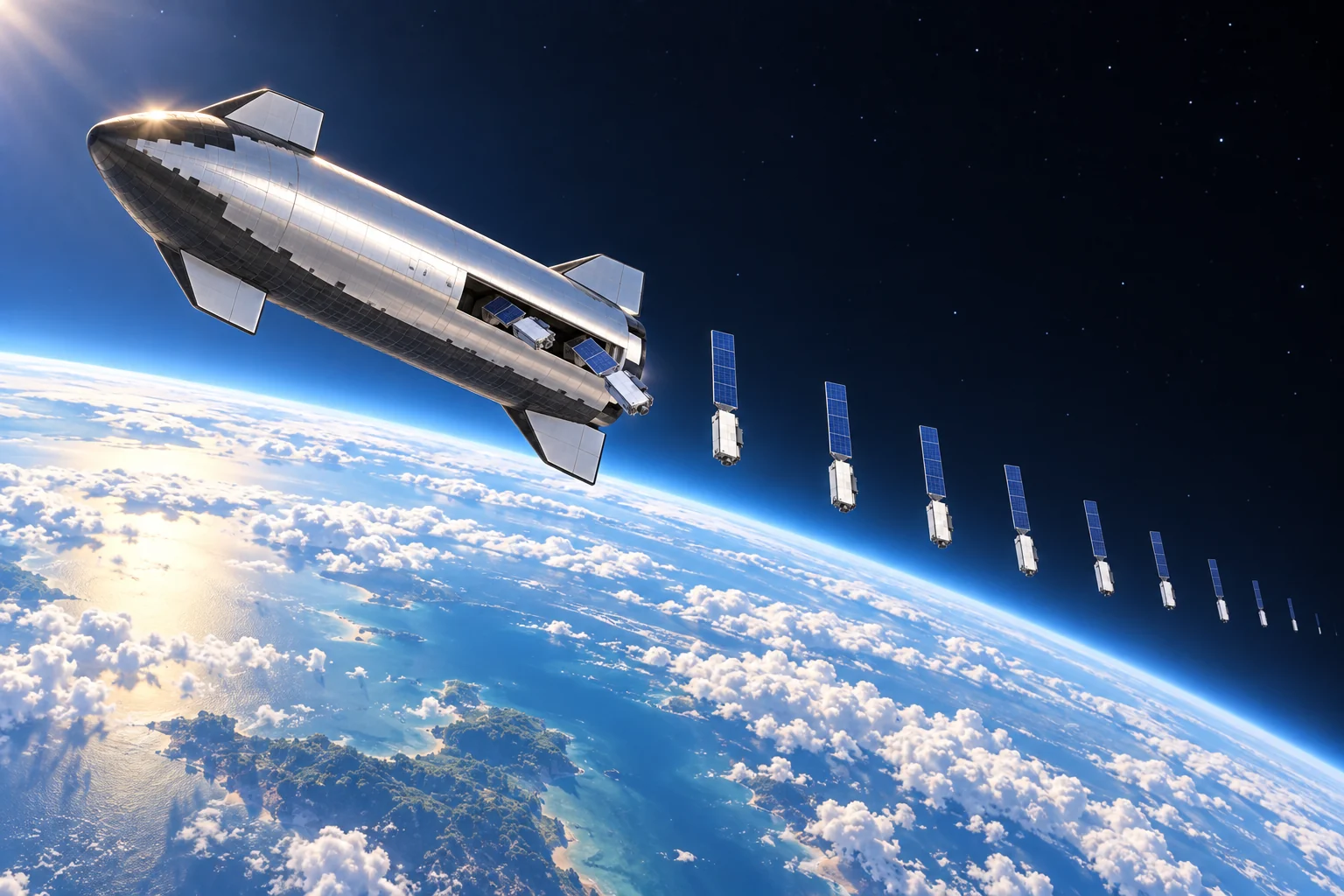
Starlink V3 deployOpen the door, then release 26 satellites in pairs, by hand, inside a moving window.
Orbits 2 to 6
CoastDebris conjunctions, eclipse power, link margins and a heat-shield scan from the camera satellites.
T+09:40
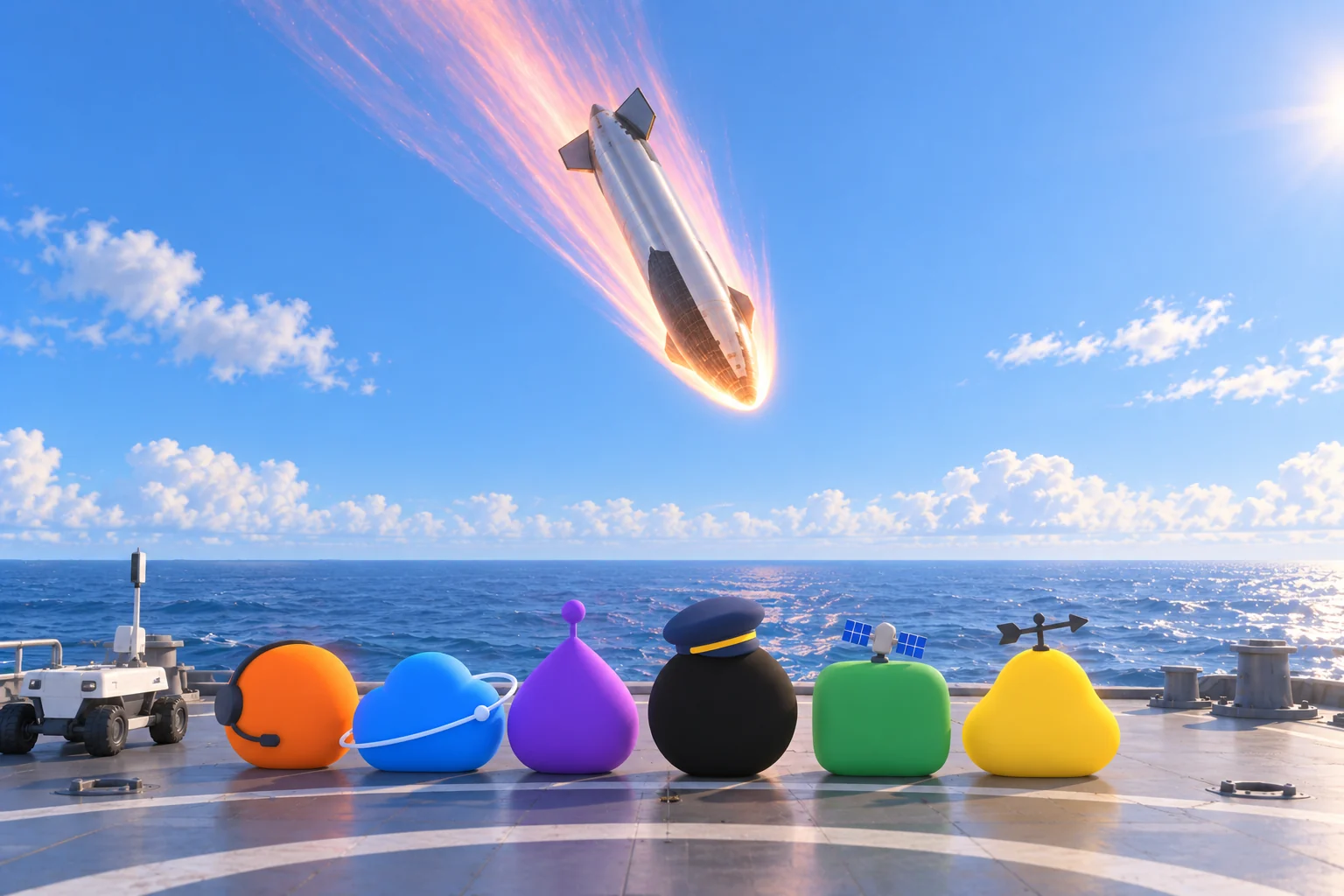
Deorbit, entry, splashdownHold one Raptor to the metre per second, fly the plasma corridor, and land near the target west of Chile.
The ship in orbit releasing flat-panel satellites over the Earth
The ship reentering over the ocean while the agents watch from the recovery deck
Active mission

Starship Flight 14

The game follows the published plan for the first Starship flight meant to reach orbit.

Sept 2875-minute window, Starbase, Texas
275 kmfirst orbital insertion for Starship
6 orbitsnearly ten hours aloft
26Starlink V3 satellites, the first ever deployed
1 Raptorsingle-engine deorbit burn
Pacificsplashdown west of Chile
The base

A town that runs a rocket.

Launch PadMission ControlPayload HangarGround StationObservatoryWeather StationObelisk PlazaCafe ApogeeCrew HousesRecovery Deck
The whole Starbase island: pad, tower, hangars, dishes, houses
The Director's record

What a good flight is worth.

Mission points reward the things a flight director is actually judged on. The leaderboard keeps your best missions.

Every Starlink V3 on orbit26 on the rack. Off-window releases tumble and are written off.+150
Agent consensus, per percentRight calls build it. Wrong calls and missed clocks cost it.+30
Vehicle integrity, per percentOverloads, debris strikes and burn-throughs all leave marks.+20
Splashdown accuracyScored on kilometres from the target point.up to +3,000
Every bad consensus you catchThe room was wrong and you overrode it correctly.+250
Best streak of right callsPer call in your longest run.+100
Questions

Before you take the chair.

Is this connected to SpaceX, xAI or Grok?

No. GROK BASE is a fan-made game. It follows the publicly announced plan for Starship Flight 14 and takes its spirit from always-on AI agents, but it is not affiliated with, endorsed by or connected to any of those companies.

Does it use real flight data?

No. Every reading in the game is simulated. The mission profile (the date, 275 km, six orbits, 26 Starlink V3 satellites, a Pacific splashdown) matches what has been published. The numbers on the cards are generated for each playthrough.

What do I actually do?

You read a flight rule, read the live number, and decide before the clock runs out. Between calls you fly three hands-on moments: the satellite release, the deorbit burn and the entry corridor. Everything else the agents handle.

How long does a mission take?

About four minutes. Ten hours of flight are time-warped, and the clock drops back to real time whenever a decision is needed.

Does it work on a phone?

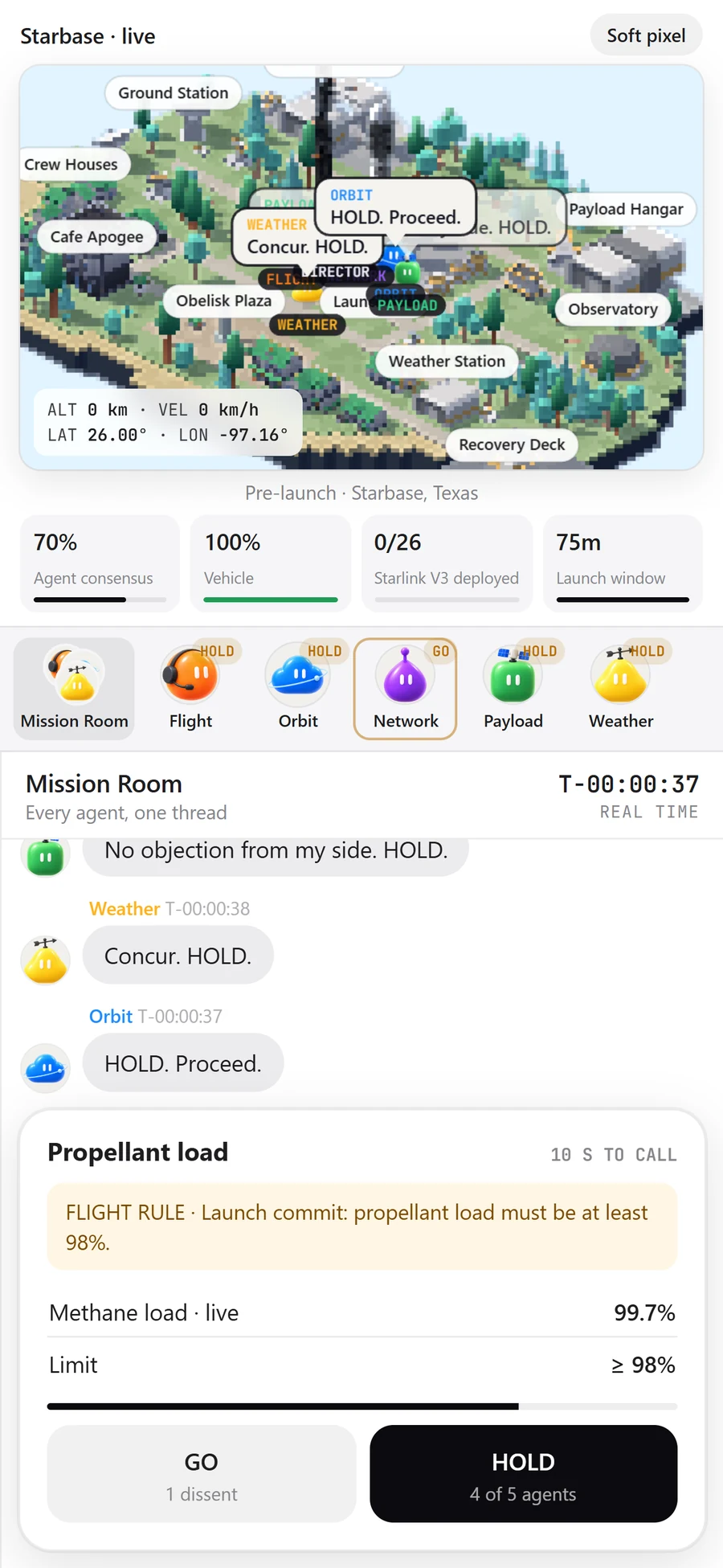
Yes. It runs in the browser on desktop and phone with nothing to install. On a phone the base sits on top, the agents' thread below it, and the decision card under your thumb.

Do mission points have any value?

No. Points are a score. They have no cash value and cannot be bought, sold or redeemed.

Six agents online. The window is open.

Plays in the browser on desktop and phone. Nothing to install.

Enter Mission Control
GROK BASE on a phone